
projects

what students built.

Start with Drainage AI, our research project, told one step at a time. Then pick a workshop to see the machines that came out of it, each with the problem it solves, a 3D model you can turn and take apart, and the video and photos we have.

the biggest project · student research

drainage ai: from two photos to a case a person can check.

When land is built on, the small natural channels that carry rain away can be covered or blocked without anyone noticing. Drainage AI is a student research project that looks for those places in public aerial photos, and shows its working so a person can check it.

  • in progress
  • 30 cases screened
  • 8 study areas
  • 0 verified by a person yet

A prototype on real public data for Cabarrus County, North Carolina. A screening tool, not a proven detector. It grows out of the Map the Water workshop (December 2026, planned).

  1. 1step 1 of 4

    two flights over the same ground

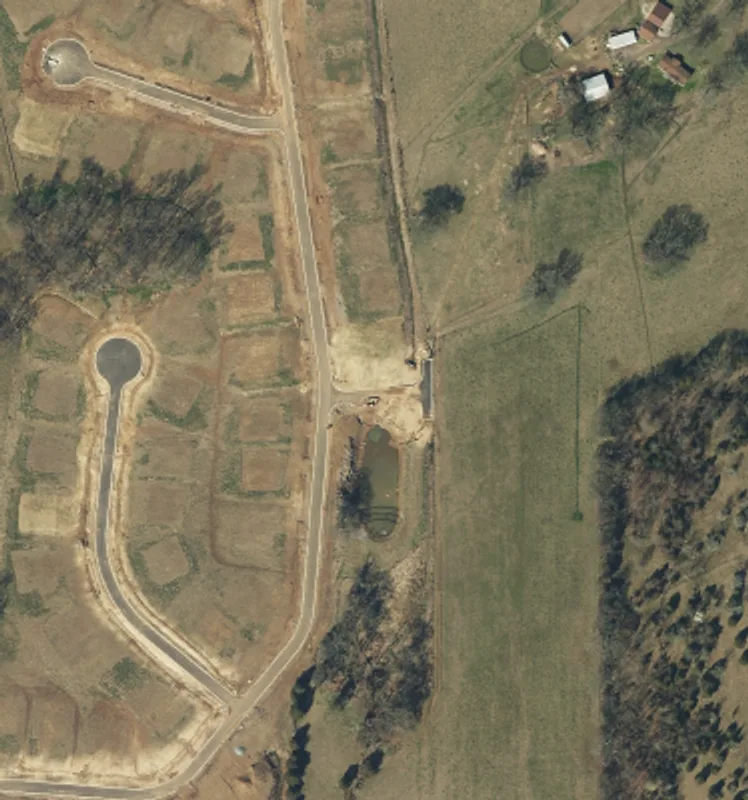
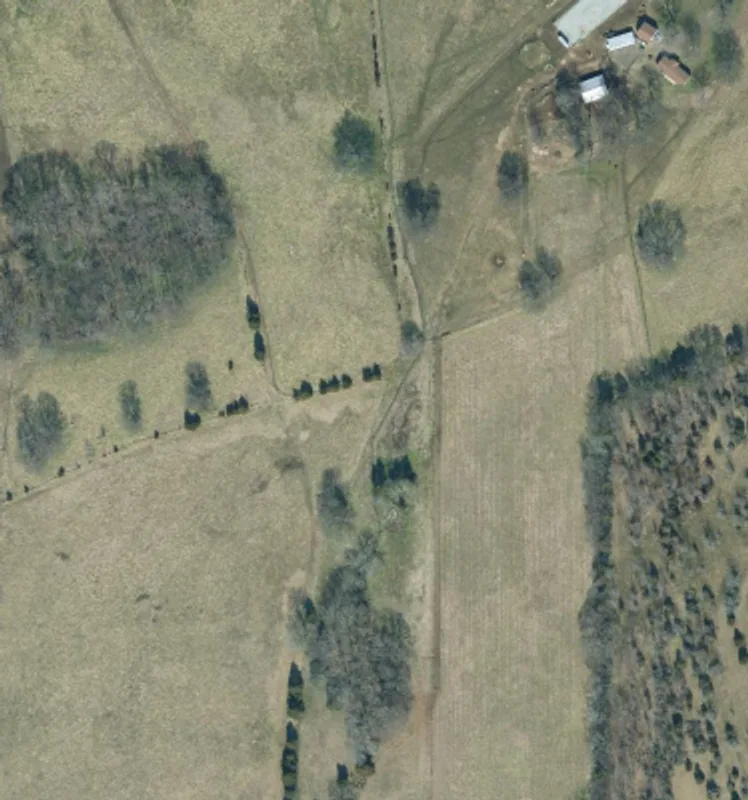
    Aerial photos of the same place from 2019 and 2023, both taken in winter when the trees are bare so the ground shows.

    flights_2019_2023.png
    Aerial photo of the same place in 2023 with a new housing development, roads and cleared ground beside the channel
    Aerial photo from 2019 of open fields and pasture crossed by a faint drainage channel and a tree line
    20192023
  2. 2step 2 of 4

    find what changed

    The engine lines the two photos up and looks for changed ground. It uses two separate ways of spotting change and only decides when they agree. The yellow outline is one changed patch.

    case_footprint.png
  3. 3step 3 of 4

    check it against the water

    It lays the changed patch over mapped streams, wetlands and channels inferred from the terrain, to see whether the change crosses a route rain would take.

    water_layers.png
  4. 4step 4 of 4

    a person looks, and nothing is called found until then

    Every case goes to a review queue with the before and after images and the records behind it. The dashboard counts how many a person has verified. Today that number is zero.

    review_queue.png

Aerial imagery: NC OneMap, NCCGIA, NC 911 Board.

june 2025 workshop

light it up: first circuits

The first workshop. Students wire their first LED circuits on a breadboard and drive them from an Arduino.

completedWorkshop build

First LED circuits

Students wire an LED and a resistor on a breadboard and drive them from an Arduino board.

the problem

Understanding why electronics fail. An LED with no resistor burns out in a moment, and a circuit with one loose wire does nothing. The build teaches students to read a circuit and fix it themselves.

how it works

Each student works out a resistor value with Ohm’s law, wires the LED on a breadboard, then writes the code that makes it blink and respond to a button.

what the students did

Every student built and debugged their own circuit.

led-breadboard.webp
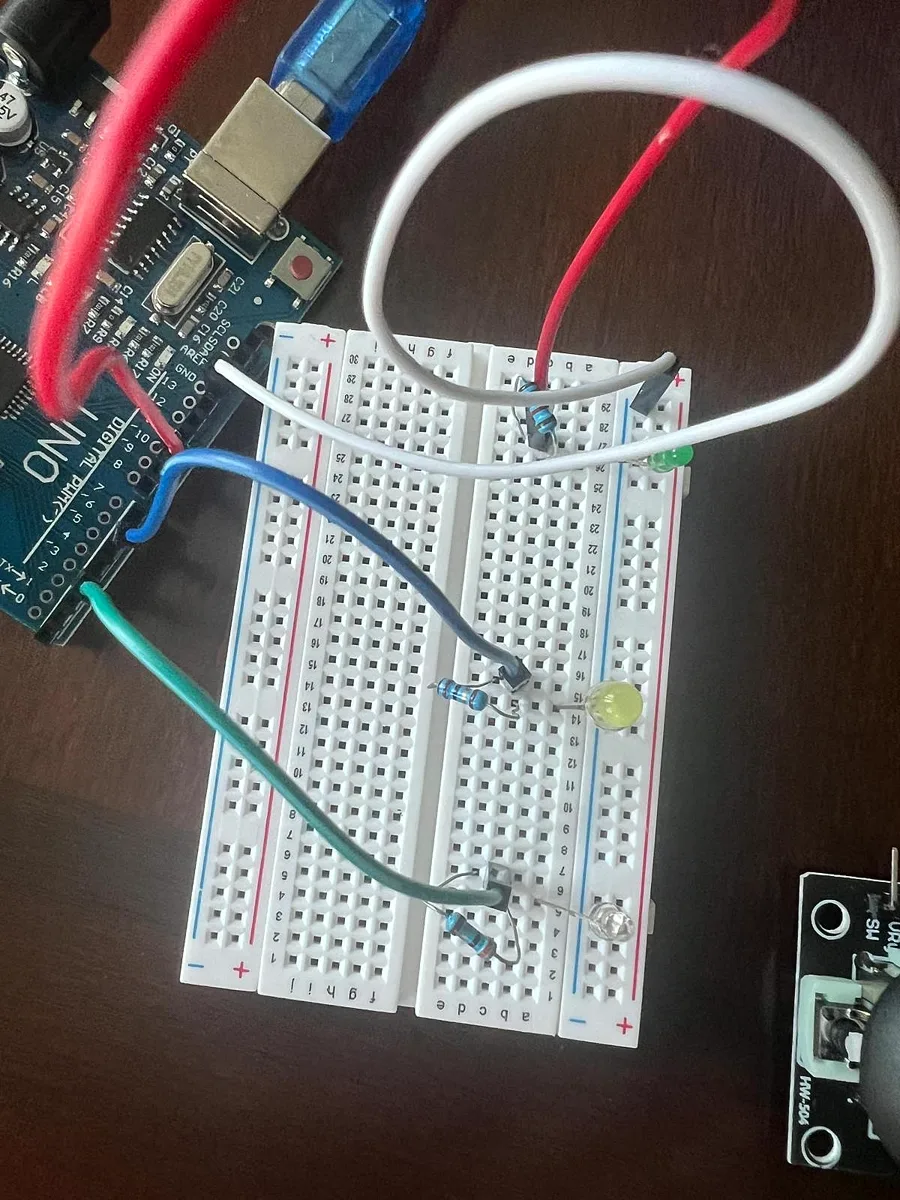
An Arduino board wired to a breadboard with resistors and LEDs
More of this build in the tabs above.

july 2025 workshop

sense and move: sensors and servos

The second workshop. Students add a distance sensor, a servo-driven arm and a joystick, and build their own machines.

completedWorkshop build

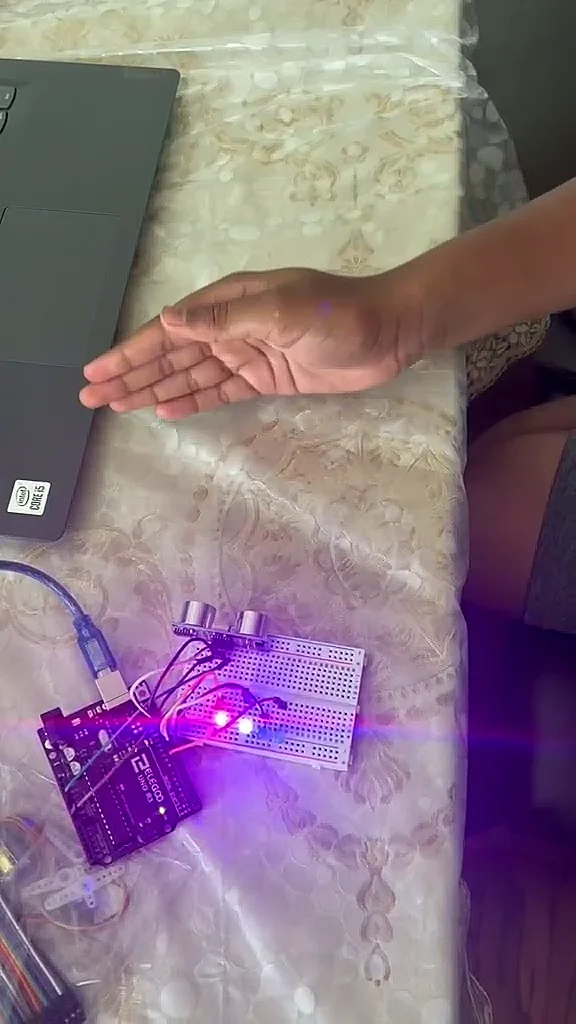
Hand-wave light

A distance sensor and three LEDs that change colour as a hand moves closer.

the problem

A parking guide for a tight garage or a shared bike store. Drivers and riders cannot tell how close they are to the wall, and nothing has to be touched or switched on.

how it works

An ultrasonic sensor measures the echo time and the Arduino turns it into a distance: green when far, blue when middling, red when too close.

what the students did

Students wired the sensor, then tuned the distances for each colour in code.

sensor-led.webp
A breadboard circuit with a purple-lit Arduino board and LEDs, with a hand held above it
More of this build in the tabs above.
completedWorkshop build

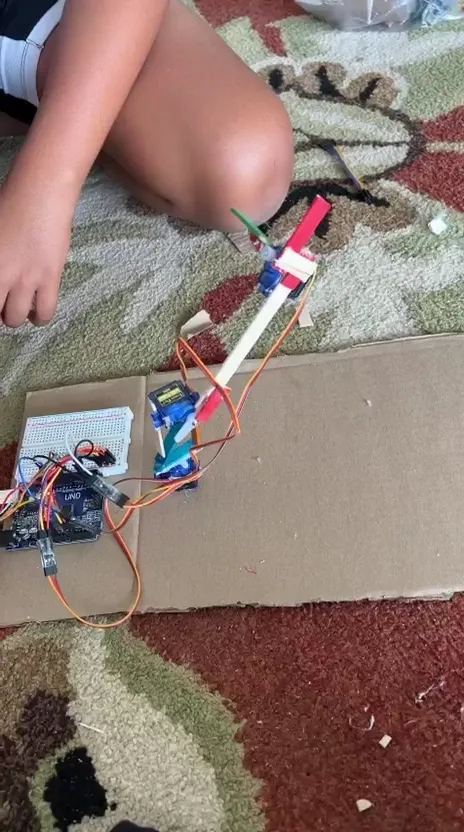
Cardboard servo arm

A moving arm built from cardboard, craft sticks and two servos controlled by an Arduino.

the problem

A tabletop sorting arm for a school recycling station. Light items such as paper cups and wrappers end up in the wrong bin, and sorting them by hand is slow and unpleasant.

how it works

The base servo swings the arm over the right bin and the tip servo turns a paddle that pushes the item off the tray. The angles are set in code, so every sort is repeatable.

what the students did

Students built the arm from a flattened box and craft sticks, and tuned the servo angles themselves.

servo-arm-1.webp
A frame from the video: A servo-driven arm built from cardboard and craft sticks, swinging on its base.
More of this build in the tabs above.
completedWorkshop build

Joystick remote

A wireless joystick that steers the sorting arm from across the room.

the problem

A remote for the sorting arm, so it can be steered without reaching into the work area.

how it works

Tilting the stick changes two numbers. The Arduino sends them over Bluetooth, and a second board turns them into servo angles for the arm.

what the students did

Students paired the Bluetooth modules and mapped the stick positions to arm angles.

Where it stands. Photos and video of this build are still being collected.

proposed next.

These are ideas, not completed work. Nothing here has been built yet.

  • Flood and drainage maps for other townsproposed
  • Introductory computer visionproposed
  • Community software projectsproposed
  • Environmental data projectsproposed
  • Accessible technology projectsproposed

Student names and faces are never published. Video and photos with people in them wait until families give written permission. See the full workshop timeline.